
Biblical Discipleship in Celestial Church

Biblical Discipleship in Celestial Church: Walking the Path of Spiritual Growth and Service
The call to discipleship stands at the heart of the Christian gospel. When Jesus walked the earth, He did not simply preach; He invested His life in twelve men, teaching them to follow Him, to understand God’s kingdom, and to multiply that influence in others. This pattern of making disciples—of transformation through intentional relationship and teaching—remains the foundation of spiritual growth in the Celestial Church of Christ.
Thank you for reading this post, don't forget to subscribe!For believers in the Celestial Church Worldwide Community, celestial church of christ biblical discipleship is not an abstract concept or a program reserved for church leaders. It is a lived reality woven into the fabric of community life, a mutual journey of faith in which every believer, regardless of background or position, engages in both being discipled and discipling others. This article explores what biblical discipleship looks like through the unique lens of Celestial Church doctrine and community practice, offering practical pathways for spiritual growth and multiplication.
Understanding Discipleship Through a Celestial Church Lens
To understand discipleship in the Celestial Church, we begin with first principles. The Greek word mathetes, translated as “disciple,” means literally “a learner” or “a student.” But in the New Testament, discipleship implies far more than intellectual learning. A disciple is one who has committed to follow a teacher, to embrace his way of life, and to be transformed by his example and instruction.
Jesus Himself defined discipleship clearly: “If any man will come after me, let him deny himself, and take up his cross, and follow me” (Matthew 16:24, KJV). This was not a casual invitation. It was a call to radical reorientation of priorities, identity, and purpose. In the Celestial Church of Christ, this biblical foundation remains central. We understand that true discipleship demands surrender to Christ’s lordship, alignment with His values, and participation in His redemptive mission.
The Celestial Church’s approach to discipleship is distinguished by its emphasis on spiritual depth, community accountability, and the supernatural work of the Holy Spirit. Our beliefs and doctrine reflect a conviction that discipleship involves not merely the transfer of information but the transformation of the whole person—spirit, soul, and body—through fellowship with God and with His people.
The Foundation: Christ-Centered Community
Discipleship in the Celestial Church cannot be separated from community. This is not incidental to our theology; it is central. The New Testament presents the early church as a community where believers devoted themselves “to the apostles’ doctrine and fellowship, and to breaking of bread, and to prayers” (Acts 2:42, KJV). This fourfold pattern—teaching, fellowship, communion, and intercession—shaped their corporate life and individual growth.
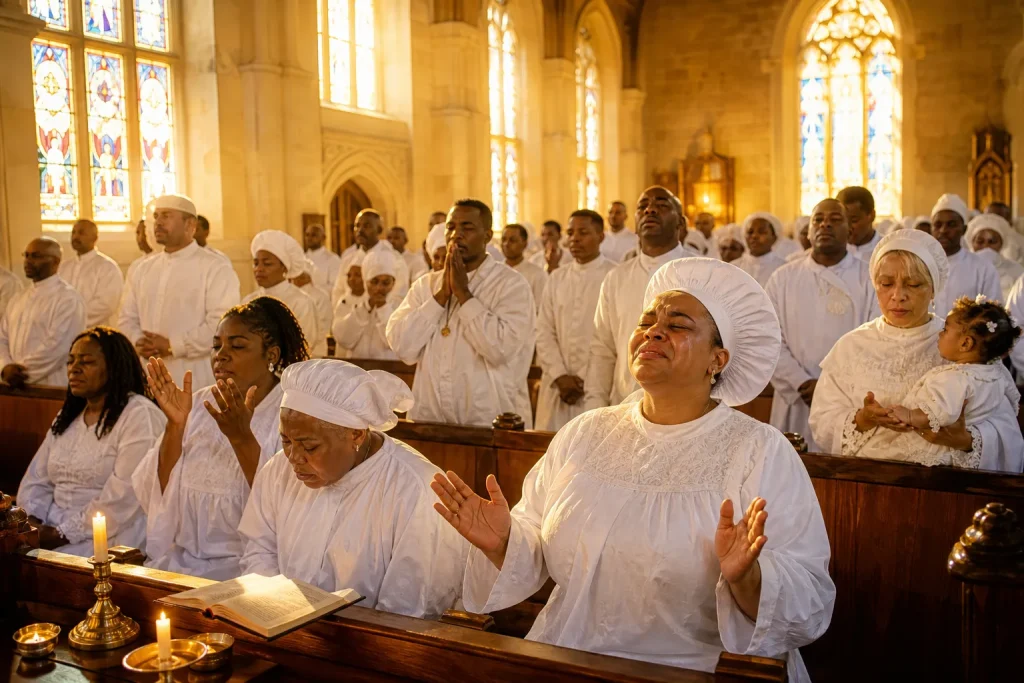
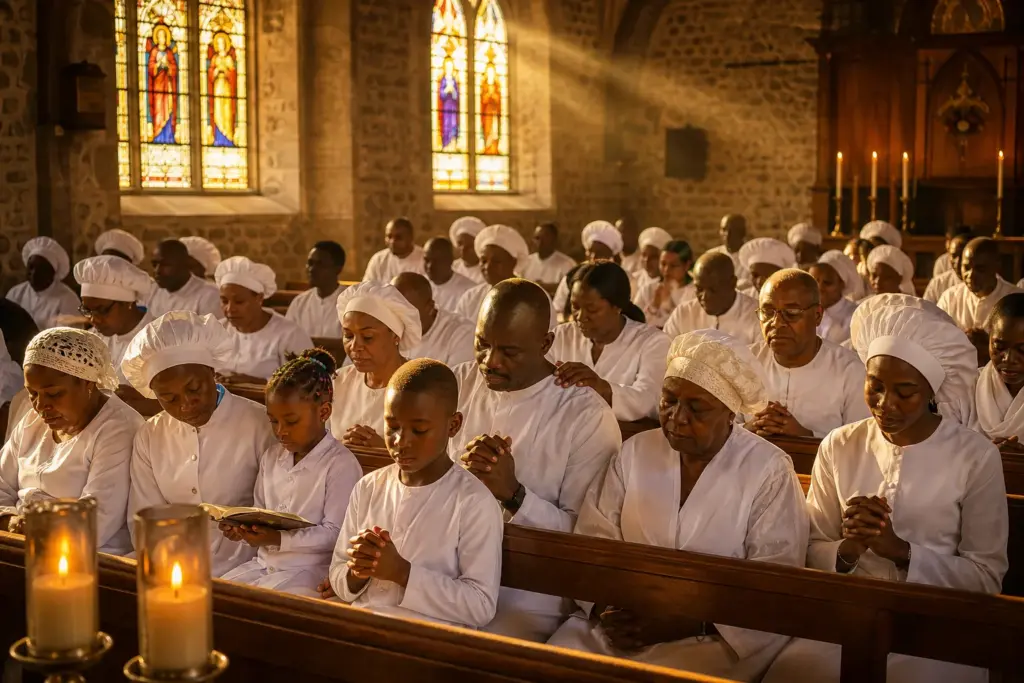
The Celestial Church honors this model. Our community features are structured to create spaces where discipleship happens naturally through shared worship, prayer, mutual encouragement, and accountability. When believers gather in small groups, prayer circles, and corporate worship, the conditions are set for discipleship to flourish. In these contexts, newer believers observe the faith of seasoned saints. Questions are asked and answered. Struggles are shared and met with compassionate wisdom. The Holy Spirit works through the collective life of God’s people.
This communal foundation distinguishes Celestial Church discipleship from approaches that treat spiritual growth as primarily individualistic or consumer-driven. We believe that God forms us as disciples not in isolation but in relationship with brothers and sisters who sharpen us, challenge us, love us, and help us become more like Christ.
The Role of Scripture and Daily Bible Study
At the heart of discipleship stands the Word of God. Jesus taught His disciples that “man shall not live by bread alone, but by every word that proceedeth out of the mouth of God” (Matthew 4:4, KJV). The Celestial Church affirms that Scripture is not merely a reference text to be consulted occasionally; it is spiritual nourishment essential to discipleship growth.
Establishing a consistent daily bible study habit is therefore a non-negotiable practice for disciples. This is not legalism but wisdom. When we read Scripture regularly, we expose ourselves to God’s voice. We encounter truths that challenge our assumptions. We discover promises that sustain us in trial. We learn God’s character and His ways. Over time, through the ministry of the Holy Spirit, these truths transform our thinking and reshape our values.
In the Celestial Church, we encourage discipleship communities to develop shared rhythms of Scripture engagement. This might include corporate Bible study nights, small group devotionals, or family reading plans. When believers study the Word together, they not only grow individually but also strengthen their bonds and develop a shared biblical vocabulary and understanding. Questions that arise in one person’s heart are addressed collectively. Insights the Spirit grants to one are shared for the benefit of all.
Practical steps to strengthen Scripture engagement in discipleship relationships include:
- Selecting a Bible reading plan suited to the discipleship group’s maturity level and available time
- Using tools like BibleGateway or Bible.com to access Scripture in multiple translations and languages
- Adopting a simple method for marking observations, cross-references, and personal applications
- Gathering weekly to discuss what God is teaching and how the Word addresses current life situations
- Memorizing key passages as a group, particularly those addressing foundational doctrines or common struggles
Spiritual Disciplines as the Infrastructure of Discipleship
Discipleship growth does not happen by accident. It requires intentional cultivation through spiritual practices that align our lives with God’s kingdom. Spiritual disciplines supporting Christian growth in community are not burdensome restrictions but liberating practices that position us to receive grace and to be transformed by the Holy Spirit.
The classic spiritual disciplines—prayer, fasting, meditation, simplicity, solitude, submission, and service—appear throughout Scripture and church tradition. In the Celestial Church, we recognize their vital importance. Each discipline serves a purpose in the disciple’s journey. Prayer opens us to communion with God and positions us to intercede for others. Fasting humbles us and heightens our spiritual sensitivity. Meditation on God’s Word renews our minds. Service keeps us focused outward on the needs of others rather than inward on ourselves alone.
An effective discipleship program introduces believers to these disciplines gradually and contextually. Rather than overwhelming a new believer with all disciplines at once, a wise mentor or discipleship group leader helps individuals understand why each discipline matters and how to practice it in ways suited to their particular season of life. A person with young children faces different rhythms than a retiree; what works for one may require adaptation for another.
Prayer deserves particular emphasis. How to pray for others in church community is a skill that discipleship cultivates. When disciples learn to intercede for one another authentically, the bonds of the community deepen. Prayer moves from abstract ritual to powerful relational practice. In intercessory prayer, we bear one another’s burdens, we stand with others in their struggles, and we invite God’s intervention in specific, named circumstances.
The Structure of Mentoring Relationships
While community is essential, discipleship also unfolds through intentional one-on-one mentoring relationships. Jesus spent concentrated time with the Twelve, answering their private questions, modeling responses to challenges, and preparing them for specific callings. This personal investment resulted in transformation that no group setting alone could have accomplished.
In the Celestial Church, discipleship relationships typically follow a relational rather than a rigidly programmatic model. A mature believer takes interest in a younger believer’s spiritual journey. They meet regularly—perhaps monthly or quarterly—to pray together, to discuss what God is teaching, to explore Scripture passages the younger believer brings, and to offer counsel on specific challenges.
Effective mentoring relationships in a Celestial Church context include:
- Regular, consistent meeting times: Disciples cannot grow without input. Monthly or biweekly meetings ensure that the mentoring relationship remains active and relevant.
- Prayer as the centerpiece: Each meeting should begin and end with prayer, positioning the entire conversation within a posture of dependence on the Holy Spirit.
- Listening more than lecturing: The best mentors ask thoughtful questions and listen intently to understand the disciple’s real questions, struggles, and experiences rather than launching into predetermined lessons.
- Modeling holistic discipleship: By inviting the disciple into their own spiritual life—their prayer practices, their struggles, their joys—the mentor demonstrates that discipleship is lived out in ordinary circumstances.
- Accountability with grace: True mentors help disciples identify areas needing growth and establish practical steps toward change, always undergirded by assurance of God’s grace and the mentor’s ongoing support.
Discipling Others: Multiplication as the Mark of Maturity
The ultimate goal of discipleship is not the discipled but the discipler. As believers grow in their relationship with Christ and in their understanding of Scripture, they are called to pour into others. Jesus’ Great Commission captures this mandate: “Go ye therefore, and teach all nations, baptizing them in the name of the Father, and of the Son, and of the Holy Ghost: Teaching them to observe all things whatsoever I have commanded you” (Matthew 28:19-20, KJV).
In the Celestial Church, we believe that every maturing believer has both the privilege and responsibility to disciple others. This is not reserved for pastors or church staff. When you have been discipled—when you have encountered Christ, experienced His transforming grace, and grown in your understanding of His kingdom—you possess something precious to share. The natural response is to invest in others as others invested in you.
This emphasis on multiplication distinguishes healthy discipleship from dependency. Some discipleship relationships inadvertently create spiritual codependency, where the younger believer becomes dependent on the mentor rather than learning to feed himself spiritually and minister to others. Wise mentors, by contrast, work toward the day when their disciples become strong enough and confident enough to mentor others themselves. The goal is never an endless vertical line of dependency but an ever-expanding network of disciples making disciples.
Initiating your own discipleship ministry might begin simply:
- Identify one or two younger believers in your church community whose spiritual growth you genuinely care about
- Invite them to meet with you in an informal, low-pressure setting
- Share your own story and ask about theirs
- Suggest reading a book or Bible passage together and discussing it
- Pray for them consistently, and let them know you are praying
- Over time, help them identify their own potential disciples and encourage them to begin investing
Addressing Common Challenges in Discipleship
Even with clear vision and good intentions, discipleship relationships and programs face real obstacles. Acknowledging these challenges honestly helps believers navigate them with greater wisdom.
The challenge of inconsistency: Life’s demands—work pressures, family responsibilities, illness—can interrupt discipleship meetings and spiritual disciplines. Rather than abandoning the practice, wise disciples and mentors build flexibility into their relationships. Missing a month of meetings is not failure; returning to consistent practice after an interruption is what matters. Grace must characterize how we treat ourselves and one another when life circumstances disrupt our plans.
The challenge of mismatched expectations: Discipleship relationships sometimes falter because the mentor and disciple have different assumptions about what the relationship should accomplish. Clear conversation at the beginning—about frequency of meetings, focus areas, and expectations—prevents misunderstandings. A mentor might say, “I’m committing to meet with you monthly for the next year to help you grow in your prayer life and understanding of Scripture. I’ll prepare some discussion questions, and I’d like you to bring any questions or passages that have been meaningful to you that month. Sound good?”
The challenge of plateau and drift: After initial enthusiasm, discipleship relationships can settle into routine or fade. Intentionality helps. Mentors should occasionally refresh the focus, introduce new practices, or shift emphasis based on changing circumstances. Disciples should communicate honestly when they feel the relationship has become stale and suggest new directions.
Discipleship and Biblical Fellowship in Christian Community
Discipleship cannot be fully separated from the broader experience of fellowship within the church community. The Greek word koinonia, often translated as “fellowship,” implies a deep sharing in common—a shared life and shared purpose. As believers worship together, serve together, and support one another through seasons of joy and sorrow, discipleship happens naturally as a byproduct of genuine Christian community.
The Celestial Church intentionally cultivates environments where this kind of fellowship flourishes. Prayer nights where believers gather to intercede together. Small groups that meet in homes for Scripture study and mutual encouragement. Work projects where the congregation serves the community and builds solidarity. Celebrations of God’s faithfulness where testimonies are shared and faith is strengthened. In all these contexts, discipleship is happening—people are being shaped by their encounters with God and with one another.
Measuring Growth: How Do We Know Discipleship Is Working?
The results of biblical discipleship are not always immediately quantifiable, but they are discernible. Scripture provides markers of spiritual maturity that help us assess growth.
A disciple growing in faith demonstrates increasing Christ-likeness. Spiritual fruit—love, joy, peace, patience, kindness, goodness, faithfulness, gentleness, and self-control—becomes more evident (Galatians 5:22-23, KJV). The disciple’s character is being transformed, not through self-effort alone but through the work of the Holy Spirit in relationship with God and God’s people.
A maturing disciple shows deepening spiritual conviction. She is more certain about core truths, more able to articulate her faith to others, more willing to stand for biblical values even when it costs her. This is not arrogance but rooted confidence in who God is and what He has revealed.
A growing disciple demonstrates increasing service and sacrifice. As Christ’s love penetrates the heart, the natural response is generosity and service. The disciple begins to order her life around others’ needs rather than purely around personal comfort or advancement. She gives of her time, talents, and resources to build up the church and serve the vulnerable.
Finally, a mature disciple is reproducing disciples. She is mentoring others, inviting younger believers into her spiritual journey, and helping them encounter Christ more fully. The multiplication of discipleship—disciples making disciples—is the ultimate marker of a healthy, fruitful community.
Building a Discipleship Culture in Your Celestial Church Community
For a local Celestial Church to become a place where discipleship flourishes requires intentional leadership and cultural formation. Our church’s community impact on faith is strengthened when discipleship is not a program but woven into the congregation’s DNA.
Vision casting: Church leaders must articulate clearly why discipleship matters and how it relates to the church’s mission. When members understand that the congregation exists not to serve them but to transform them into Christ’s likeness and commission them for His work, they respond with greater engagement.
Removing barriers: Some churches inadvertently make discipleship difficult by overcomplicating it or making it seem available only to spiritually elite or especially committed believers. More biblical is to make simple, accessible pathways clear: “Everyone can participate in a mentoring relationship. Everyone can join a small group. Everyone can read the Bible daily and pray.” The invitation is open to all.
Training leaders: Pastors and lay leaders need equipping in how to mentor effectively, how to facilitate group discussion, how to apply Scripture to real-life circumstances. Our Celestial Church Worldwide resources provide tools and teaching to strengthen this capacity.
Creating accountability structures: Without some form of accountability, even well-intentioned discipleship initiatives drift. This might include regular conversations among discipleship leaders about what they are observing and learning, quarterly reviews of discipleship groups to assess how they are functioning, and ongoing invitation for feedback from participants about what is and is not working.
Celebrating testimonies: When discipleship is bearing fruit—when a young believer has found freedom from a destructive habit, when a mentoring relationship has resulted in deepened faith, when someone has stepped into a new ministry because they felt equipped and called—these stories should be shared. Testimony motivates others and demonstrates that discipleship is real and powerful.
A Practical Discipleship Action Plan
If you are serious about growing as a disciple and about discipling others, consider this practical framework:
Step One: Assess your own spiritual foundation (Week 1-2). Spend time in honest reflection. How solid is your own relationship with Christ? How consistent are your spiritual disciplines? Where are your growing edges? You cannot take others where you have not yet traveled yourself. Being a disciple precedes being a discipler.
Step Two: Commit to spiritual practices (Weeks 3-4). If they are not already part of your rhythm, establish a daily Scripture-reading habit. Choose a simple prayer practice you can maintain. Find or form a small group or mentoring relationship where you are being discipled. These practices are your foundation.
Step Three: Identify potential discipleship partners (Weeks 5-6). Who is one or two believers in your community whose spiritual growth you genuinely care about? Who has shown openness to being challenged and grown in faith? Begin praying for these individuals by name.
Step Four: Initiate the conversation (Week 7-8). Ask your potential disciple or mentor to grab coffee or meet for prayer. Be honest about what you are hoping for: “I feel like God is calling me to grow deeper in my faith and to invest in others’ spiritual growth. Would you be willing to meet with me once a month to study Scripture, pray together, and discuss what God is teaching us?” Most believers respond positively to genuine invitation.
Step Five: Establish a rhythm (Week 9 onward). Once you have committed to meeting, settle on a specific time and place. Prepare a simple structure: perhaps 15 minutes of prayer, 30 minutes of Scripture discussion, and 15 minutes of personal sharing and encouragement. Keep it simple enough that you can sustain it long-term.
Frequently Asked Questions About Celestial Church Discipleship
What is biblical discipleship according to Celestial Church of Christ doctrine?
Biblical discipleship in the Celestial Church is the intentional process by which believers grow in their relationship with Jesus Christ, are transformed to reflect His character, and learn to multiply this impact in others’ lives. It is rooted in Scripture, nurtured in community, shaped by spiritual disciplines, and marked by the fruit of the Holy Spirit. Our doctrinal foundation emphasizes that discipleship involves the whole person—spirit, soul, and body—and that it is inseparable from our life together as God’s people. Unlike approaches that treat spiritual growth as primarily individual or intellectual, we believe discipleship happens in relationship: with God through Christ, with the community of believers, and with those we ourselves mentor.
How do I become a disciple and disciple others in the CCC community?
Becoming a disciple begins with a choice to follow Jesus. You yield your life to His lordship, accept His forgiveness through His death and resurrection, and commit to learning His ways. Within the CCC, this typically means joining a local congregation, participating in worship and prayer, connecting with a small group or mentoring relationship, and establishing daily practices of Scripture reading and prayer. As you grow, you naturally move toward discipling others—identifying believers you care about, investing time in their spiritual journey, and helping them encounter Christ and understand His kingdom more fully. The transition from being primarily a disciple to being both a disciple and a discipler happens gradually and naturally as you mature. There is no official moment or title; it is simply the outworking of your deepening faith and obedience.
What spiritual disciplines support discipleship growth in Celestial Church fellowship?
Spiritual disciplines supporting growth in our community are practices that position us to receive God’s grace and be transformed by His Spirit. Prayer—both personal and corporate—is foundational. Scripture study, whether through daily bible study practices or group exploration, nourishes spiritual growth. Fasting heightens our spiritual sensitivity and humbles our hearts. Service to others keeps us focused on Christ’s kingdom rather than our own advancement. Confession of sin to God and, in appropriate contexts, to trusted believers, cleanses us and opens us to healing. Simplicity—living with less in order to be freer for what matters most—realigns our priorities. Meditation on God’s Word and character stills our minds and opens them to His truth. Solitude—periods of quiet away from constant stimulation—refreshes our spirits and deepens our awareness of God’s presence. The Celestial Church Worldwide community provides structures and rhythms through which these disciplines are cultivated and practiced together.
A Closing Reflection on Discipleship
The call to discipleship is not new. For nearly two thousand years, followers of Jesus have responded to the ancient invitation to learn His way, to be transformed by His truth, and to share that transformation with others. In the Celestial Church of Christ, we stand in this grand tradition. We believe that God desires to form us—not in isolation but in the context of beloved community—into the likeness of His Son.
If you are reading these words and feel a stirring in your spirit—a sense that God is calling you to deeper discipleship, to greater investment in others’ spiritual journeys, or simply to reconnect with foundational practices—that stirring is worth heeding. The Holy Spirit often works through such gentle whispers. Respond by taking one small step: commit to a daily Scripture practice, reach out to a mentor, or invite someone into your own discipleship journey.
A prayer for your journey: Lord Jesus, thank You for the gift of discipleship—for the grace that transforms us and the privilege of investing in others’ spiritual growth. Guide us into deeper relationship with You. Surround us with wise mentors and faithful companions in faith. Give us courage to step into our calling as disciples and as those who make disciples. May our lives bear the fruit of the Spirit. May our community be a place where Your kingdom comes alive. And may others see in us the reality of Your resurrection power. We commit ourselves to this journey, trusting in Your grace. Amen.
Trusted Resources for Further Study
For deeper study see BibleGateway, Bible.com, Britannica, WHO, and Library of Congress.