
Spiritual Disciplines for Christian Growth in Community

Growing as a Christian is not a solitary journey—it is a lifelong commitment that flourishes best within the context of community, accountability, and shared spiritual practice. If you are seeking to deepen your faith and understand how spiritual disciplines for Christian growth can transform your daily life, this article will guide you through practical, tested approaches that work especially well within the Celestial Church of Christ community structure.
Thank you for reading this post, don't forget to subscribe!Many believers struggle with consistency in their spiritual lives. They want to pray more, read Scripture regularly, serve faithfully, and grow closer to God, but without a clear framework and community support, these desires remain unfulfilled wishes. The good news is that spiritual disciplines are learnable skills—habits that become easier and more rewarding over time when practiced deliberately and supported by your church community.
What Are Spiritual Disciplines and Why Do They Matter?
Spiritual disciplines are intentional, regular practices that train our hearts and minds toward obedience to God and alignment with His character. They are not rules imposed from outside but tools we choose to develop a deeper relationship with our Creator. Think of them like athletic training: a marathon runner does not wake up one day and run 26 miles. She builds endurance through consistent, disciplined practice.
The apostle Paul wrote, “I discipline my body like an athlete, training it to do what it should. Otherwise, I fear that after preaching to others I myself might be disqualified” (1 Corinthians 9:27, New Living Translation). This principle applies to our spiritual lives as much as our physical ones.
Spiritual disciplines help us:
- Develop awareness of God’s presence in daily life
- Align our desires and choices with biblical truth
- Build resilience against temptation and worldly pressures
- Create space for God to shape our character
- Experience lasting peace and spiritual satisfaction
Without intentional practice, our faith can become reactive—responding to crises or emotional moments rather than grounded in steady, deepening relationship with God. When we cultivate spiritual disciplines, we move from occasional bursts of religious activity to a sustained, transformative way of living.
Core Spiritual Disciplines That Transform Lives
Prayer: The Foundation of Every Spiritual Life
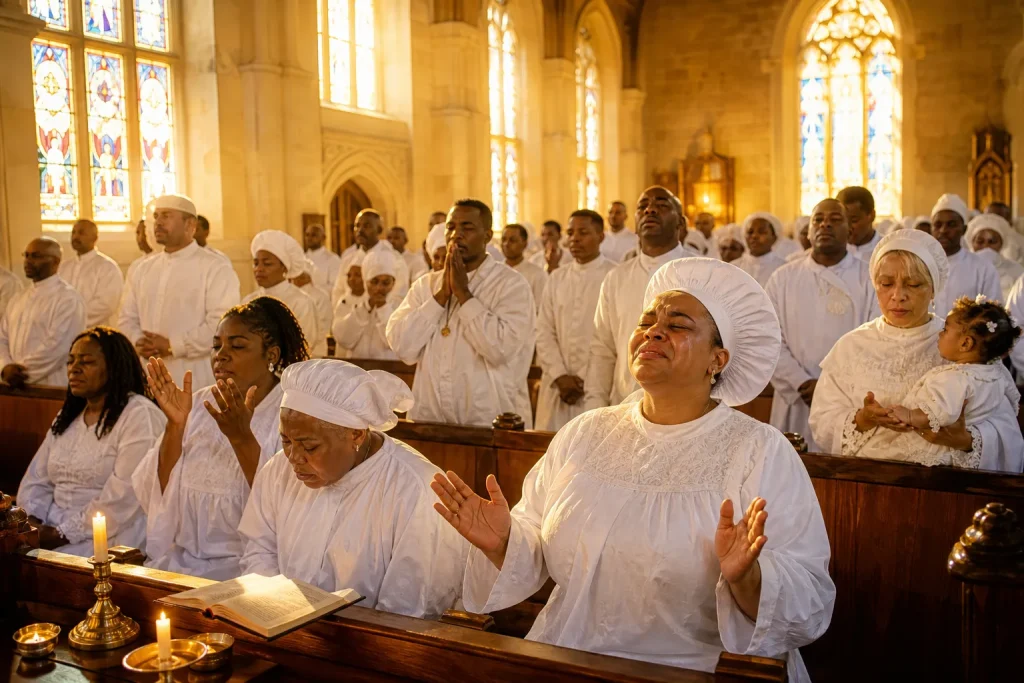
Prayer is conversation with God—honest, vulnerable, persistent dialogue with your Creator. Yet many Christians struggle with prayer because they approach it as a task to complete rather than a relationship to nurture. In the Celestial Church of Christ, prayer is central to our community identity and worship life.
Effective prayer practice includes multiple dimensions: adoration (praising God for who He is), confession (admitting sin and receiving forgiveness), thanksgiving (expressing gratitude), and intercession (praying for others’ needs and the broader world). When you practice all these forms, prayer becomes dynamic and deeply satisfying.
A simple daily prayer practice might follow this structure:
- Morning: Begin with gratitude and surrender of your day to God
- Midday: Brief prayers of praise and requests as situations arise
- Evening: Reflection on God’s faithfulness and confession of failures
- Weekly: Extended intercessory prayer for church members and global needs
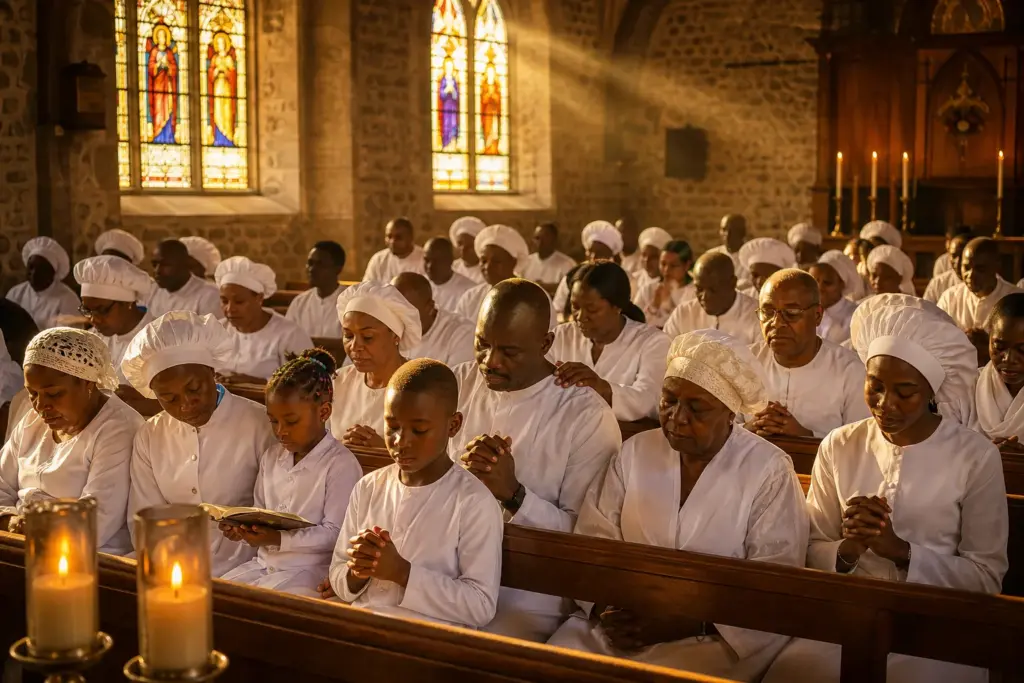
Within your church community, you can deepen prayer through corporate intercession gatherings, prayer chains, and mentoring relationships where experienced believers model their prayer lives for you.
Bible Study: Feeding Your Soul God’s Word
Scripture is living and active, capable of transforming how you think, what you value, and how you treat others. Yet reading the Bible without intention often leaves us unmoved. Developing a consistent Bible study method is essential to spiritual growth.
Several proven approaches to Scripture engagement include:
- SOAP method: Scripture, Observation, Application, Prayer. Read a passage carefully, note what stands out, identify how it applies to your life, and pray in response.
- Inductive study: Ask three questions of a passage: What does it say? What does it mean? What does it mean for me?
- Lectio Divina: An ancient practice of reading, meditation, prayer, and contemplation that slows you down to listen deeply.
- Book study: Reading through entire books of the Bible to grasp their overall themes and flow.
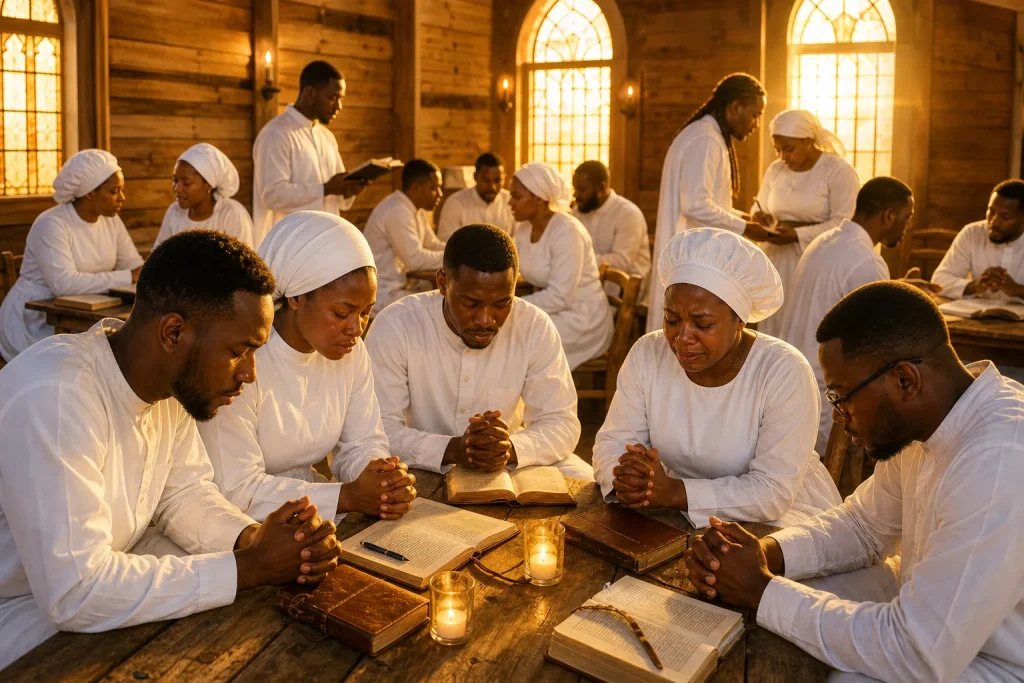
The Celestial Church of Christ provides community support for Bible study through faith courses designed specifically for Christian growth. Studying Scripture with other believers creates accountability, deepens understanding through group discussion, and helps you see how God’s Word applies in real, varied situations beyond your own perspective.
Fasting: Training Your Soul to Long for God
Fasting—abstaining from food, media, or other good things—is a spiritual discipline that redirects your craving and dependence toward God. In our culture of constant consumption and entertainment, fasting is countercultural and powerful. It teaches you that you are not controlled by appetite and that your deepest satisfaction comes from God’s presence, not physical gratification.
Fasting is not about earning God’s favor or punishing your body. Rather, it is strategic voluntary discomfort that trains your spirit. Jesus said to His followers, “When you fast, do not look somber as the hypocrites do, for they disfigure their faces to show others they are fasting” (Matthew 6:16). The point is inward reorientation, not external display.
Beginners might start with:
- One meal per week, using the time normally spent eating to pray
- A digital fast: no social media or entertainment for 24 hours
- Fasting from a favorite beverage or snack, redirecting the money saved to charity
- Corporate church fasts during seasons like Lent, where the whole community participates together
Community fasting intensifies the experience and creates shared spiritual awareness among church members who are all wrestling with the same discipline.
Worship: Aligning Your Heart with God’s Glory
Worship is not merely singing in church on Sunday. It is the continuous practice of recognizing God’s supremacy and responding with love, obedience, and wonder. When worship becomes a daily discipline—in the shower, during your commute, in times of hardship—it fundamentally shifts your perspective and emotional life.
The Celestial Church of Christ places deep emphasis on worship practices that unite our community and express our reverence for God. Worshipful practices include:
- Singing hymns or contemporary Christian music that declare God’s character
- Offering your work, relationships, and challenges back to God as worship
- Celebrating God’s faithfulness in your life story and the stories of believers throughout history
- Participating in Communion or other ordinances with full attention and spiritual hunger
- Responding to Scripture or preaching with openness to how God might speak to your unique situation
Worship discipline trains your affections—what you feel and love—to align with biblical truth. Over time, this reshapes your desires and choices.
Journaling: Creating Space for Reflection and Growth
Journaling is a discipline of honest reflection where you write your prayers, record God’s work in your life, process struggles, and track spiritual growth over time. It creates a bridge between your inner thoughts and external practice, making abstract spiritual concepts concrete and personal.
Journaling need not be elaborate. Simple approaches include:
- Writing three things you are grateful for each morning
- Recording answers to prayer and God’s faithfulness
- Processing emotional struggles by writing letters to God
- Documenting spiritual insights from Scripture or sermons
- Reviewing past journal entries to see growth patterns and God’s consistent care
Many believers find that returning to old journals reveals how God has guided them through seasons they felt lost, deepening their faith and trust.
Service: Expressing Love Through Action
Spiritual disciplines are not purely inward-focused. Service—caring for the poor, visiting the sick, helping neighbors, using your gifts to build up others—is a crucial discipline that expresses faith in tangible ways. Jesus Himself modeled this by washing His disciples’ feet and spending His life serving others.
Service disciplines might include:
- Regular volunteering in your church’s outreach or care ministries
- Intentional kindness toward difficult relationships
- Financial generosity toward those in need
- Using your professional skills to help church or community projects
- Mentoring younger believers or those new to faith
When you serve alongside other church members through church groups focused on spiritual growth, you experience the joy of kingdom work together and strengthen community bonds.
How Community Strengthens Your Spiritual Disciplines
Individual spiritual practice is important, but it becomes far more powerful and sustainable within community. This is why the Celestial Church of Christ structure and how church community strengthens faith is not peripheral but central to spiritual growth.
Accountability Keeps You Consistent
When you commit to spiritual practices within a faith community, people know your intentions and can ask you how it is going. This accountability—not in a judgmental way, but in a supportive way—helps you follow through on commitments when motivation wanes. A prayer partner, Bible study group, or discipleship mentor provides gentle, loving accountability that keeps you on track.
Shared Experience Deepens Understanding
When multiple people study the same Scripture passage, they bring different life experiences, questions, and insights. This diversity of perspective enriches everyone’s understanding far beyond what individual study produces. Similarly, praying together in church services or prayer meetings creates a spiritual atmosphere that elevates individual prayer.
Modeling and Mentoring Accelerate Growth
Watching mature believers live out their faith—seeing how they pray, study Scripture, handle temptation, serve others, and persevere through difficulty—teaches you invaluable lessons you could not learn from books alone. Mentorship relationships, whether formal or informal, allow you to ask questions, process struggles, and receive wisdom from those further along the journey.
Encouragement Sustains You Through Plateaus
Spiritual growth is not linear. You will experience seasons where prayer feels dry, Scripture seems distant, and serving feels burdensome. In these seasons, encouragement from fellow believers who have navigated similar valleys is invaluable. They remind you that God is still at work and that perseverance is rewarded.
Developing Your Personal Spiritual Growth Plan
A practical spiritual growth plan begins with honest assessment and proceeds step-by-step. Here is a framework:
Step 1: Assess Your Current Practice
Which spiritual disciplines are already part of your routine? Which ones feel weak or absent? Write down what you actually do, not what you wish you did. Be honest about obstacles: time constraints, motivation, clarity, or other barriers.
Step 2: Choose One or Two Disciplines to Develop
Do not try to overhaul your entire spiritual life at once. Select one or two disciplines where you sense God calling you to deeper practice. Perhaps prayer feels inconsistent, or Scripture reading has lapsed. Start with whatever feels most urgent and accessible.
Step 3: Define Specific, Measurable Practices
Instead of “I will pray more,” commit to “I will pray for fifteen minutes each morning before breakfast.” Instead of “I will read the Bible,” commit to “I will read three chapters and journal one insight each day.” Specific commitments are far more likely to be kept than vague intentions.
Step 4: Find Community Support
Share your commitment with a prayer partner, small group, or mentor within your church. Check in regularly about how it is going. If you are part of the Celestial Church of Christ, explore the community features and structures designed to support your growth.
Step 5: Track Progress and Adjust
After four weeks, assess honestly: Are you following through? What is helping? What obstacles have emerged? Adjust your plan based on reality. Perhaps you need to change the time of day, find a different study method, or increase accountability. This is not failure; it is wisdom about how you actually live and learn.
Step 6: Add Gradually
Once one or two disciplines feel sustainable—part of your regular rhythm rather than a burden—consider adding another. Over time, multiple disciplines work together to create a comprehensive spiritual life that touches every area of who you are.
A Sample Weekly Spiritual Discipline Schedule
Here is what a balanced spiritual life might look like, adaptable to your circumstances:
Daily Practices:
- Morning prayer and Scripture reading (15–30 minutes)
- Brief prayers throughout the day in moments between activities
- Evening gratitude and reflection before sleep (5–10 minutes)
Weekly Practices:
- Corporate worship at church with full engagement and attention
- Prayer meeting or small group Bible study (1–2 times)
- One day of partial or full fasting with focused prayer
- Service or ministry activity using your gifts (1–2 hours)
- Journaling or extended reflection time (1 hour)
Monthly/Seasonal Practices:
- One-on-one time with a mentor or prayer partner to discuss spiritual growth
- Attending a discipleship course or training offered by the church
- Reading a Christian book that develops your thinking or challenges your assumptions
- Extended retreat or prayer time, even just a few hours alone with God
This schedule is illustrative. Your actual practice will be shaped by your season of life, work demands, family responsibilities, and spiritual maturity. The point is intentional, balanced practice rather than perfectionistic completion of every item.
Overcoming Common Obstacles to Consistent Practice
Obstacle: “I Do Not Have Time”
The issue is rarely time but priority. You find time for what matters most. Rather than adding something to your schedule, consider replacing a less important activity—scrolling social media, watching entertainment, sleeping in. Start small: ten minutes of prayer is better than no prayer while you wait for the perfect 30-minute block that never comes.
Obstacle: “I Do Not Feel Motivated”
Feelings are not the foundation of spiritual discipline. You brush your teeth regardless of how you feel because you know it is important. Similarly, practice spiritual disciplines because you believe they matter and you trust God, not because they feel good today. Motivation often returns after you persist through the dry season.
Obstacle: “I Always Fall Back Into Old Patterns”
This is normal. Spiritual growth includes repeated cycles of commitment, struggle, failure, repentance, and renewal. Do not shame yourself for lapses. Instead, examine what triggered the lapse—fatigue, stress, discouragement—and adjust your approach. Ask your church community for support in the specific area where you struggle.
Obstacle: “I Feel Guilty When I Miss Practice”
Guilt can be useful if it motivates repentance and renewal. But condemning guilt that crushes you is not from God. Grace means that one missed prayer time does not erase your spiritual progress or God’s love for you. Respond to lapses with compassion toward yourself, then simply resume the practice.
The Role of Grace in Spiritual Discipline
An important balance must be maintained: spiritual discipline is not a way to earn God’s favor or prove your worth. You are already accepted, already loved, already declared righteous through Christ’s work. Disciplines are responses to grace, not routes to it.
The apostle Paul wrote, “For by grace you have been saved through faith, and this is not your own doing; it is the gift of God” (Ephesians 2:8–9). This grace is the foundation. Spiritual disciplines are how you work out this salvation in your daily life, increasingly conforming to Christ’s character and responding to His love.
When you feel that your discipline is not measuring up, return to the reality that God loves you completely in Christ, regardless of your performance. This truth actually energizes sustainable practice rather than crushing it under burden.
Using Church Resources to Deepen Spiritual Practice
The Celestial Church of Christ provides resources and structures designed specifically to support spiritual growth. These include:
- Faith courses that guide you through spiritual growth in a structured, group setting
- Small groups and prayer meetings where accountability and community support flourish
- Mentorship connections that link you with more experienced believers
- Worship services and corporate prayer gatherings that elevate individual practice
- Teaching and preaching that equip you with biblical knowledge for your journey
Do not try to go it alone. Lean into the community God has placed you in. Ask leaders about discipleship opportunities, join a small group, find a prayer partner, and be honest about your struggles and desires for growth.
Measuring Spiritual Growth: How Will You Know You Are Changing?
Spiritual growth is sometimes subtle and internal before it becomes visible. However, there are signs you can observe:
- Increasing awareness of sin: You notice wrong attitudes and actions more quickly
- Deepening love for others: You find yourself more patient, kind, and forgiving
- Growing confidence in God: You trust Him more in difficulty and circumstances
- Greater peace: Even in chaos, you experience God’s stabilizing presence
- Expanded generosity: You give more freely of time, money, and attention
- Developing discernment: You increasingly recognize God’s voice and leading
- Lasting joy: Contentment that is not dependent on circumstances
These changes are not guaranteed in a specific timeline. But over months and years of consistent practice, people around you and within you will notice that you are different—more like Christ, more at peace, more useful to God’s kingdom.
Frequently Asked Questions
What are the core spiritual disciplines that strengthen Christian faith?
The most foundational spiritual disciplines are prayer (ongoing conversation with God), Bible study (feeding your mind and spirit with God’s Word), worship (expressing your love and reverence for God), fasting (training your spirit to depend on God), service (expressing faith through love in action), and journaling (reflecting on and processing your spiritual journey). These disciplines have been practiced by Christians across centuries and denominations because they consistently draw believers closer to God and produce fruit in their lives. Different seasons may call for emphasis on different disciplines. For example, someone working through grief might emphasize prayer and journaling, while someone new to faith might prioritize Bible study and worship.
How does practicing spiritual disciplines within a church community enhance personal growth?
Church community enhances discipline practice in several powerful ways. First, accountability keeps you consistent when motivation fades; knowing that your small group or prayer partner will ask how you are doing provides gentle pressure to follow through. Second, diverse perspectives from other believers studying Scripture or praying together deepen your own understanding in ways solitary practice cannot. Third, mentorship relationships allow you to learn from those further along the journey, observing how mature faith navigates real challenges. Fourth, encouragement from fellow believers sustains you through dry seasons when practice feels difficult. Finally, shared worship and corporate prayer create a spiritual atmosphere that lifts individual practice to a higher level. Community transforms isolated effort into transformative, joyful participation in something much larger than yourself.
What is a practical daily spiritual discipline plan for Celestial Church of Christ members?
A practical daily plan might include: morning prayer and Scripture reading (15–30 minutes) to start your day aligned with God’s presence; brief prayers and moments of worship throughout the day as circumstances arise; engagement with Scripture through one of the proven study methods during your day; intentional service or kindness toward one person; evening reflection and gratitude before sleep. Each week, add church attendance or worship service with full attention, participation in a small group or Bible study, one period of fasting with focused prayer, and service through a ministry you are involved in. Monthly or quarterly, pursue deeper study through discipleship courses and cultivate mentorship relationships. This rhythm balances individual practice with community participation, inward transformation with outward service, and daily habits with deeper seasons of growth. Adjust the specifics to your circumstances, but maintain the overall balance.
Moving Forward: Your Next Step
Spiritual disciplines for Christian growth are not burdensome obligations but invitations to deeper relationship with God and fuller, richer lives. They are how you cooperate with the Holy Spirit’s transforming work in you. You cannot change your own heart, but you can position yourself through intentional practice to be changed by God’s grace and power.
If you have been reading this and sensing that something needs to shift in your spiritual life, that sense is likely the Holy Spirit inviting you to move closer to God. Do not wait for perfect conditions or complete understanding. Choose one discipline, commit to practicing it for four weeks, find one person to support and encourage you, and begin. Growth happens one day, one practice, one decision at a time.
The Celestial Church of Christ community stands ready to walk alongside you. We believe that together, submitted to God’s Spirit and to one another, we grow in ways we never could alone. Your commitment to spiritual disciplines is not just about your own transformation—it strengthens our entire faith community as you become more like Christ and more useful in His kingdom work.
A Closing Prayer:
O God, we come before You recognizing that true spiritual growth comes only through Your work in us. We confess that we are inconsistent, that our good intentions often fail, and that we need Your grace and the support of community to press forward in faith. We ask You to awaken in us a fresh desire for deeper relationship with You. Help us see spiritual disciplines not as burdens but as privileges—opportunities to know You better, to experience Your presence, and to become more like Christ. Give us wisdom to choose disciplines suited to our season of life, strength to persist through difficulty, and grace to extend mercy to ourselves when we fall short. Bind us together as a community that mutually encourages, supports, and rejoices in one another’s growth. We pray all of this in the precious name of Jesus, our Savior and King. Amen.
To explore the Celestial Church of Christ community and discover discipleship resources that can support your spiritual growth, visit our main website or learn more about our mission and values. Your journey toward deeper faith is important, and we are honored to be companions with you along the way.
Trusted Resources for Further Study
For deeper study see BibleGateway, Bible.com, Britannica, WHO, and Library of Congress.