
Celestial Church of Christ: Core Beliefs & Doctrine


Understanding what the Celestial Church of Christ believes requires looking beyond surface-level doctrine to grasp a living, breathing faith tradition that has shaped millions of believers across the globe for generations. The Celestial Church of Christ core beliefs form the spiritual foundation for a worldwide community committed to authentic Christianity grounded in Scripture, spiritual sensitivity, and practical discipleship. This article explores the theological framework that defines the Celestial Church, how doctrine informs worship and community life, and what it means to belong to a faith tradition centered on Christ as Savior, the Holy Spirit as Comforter, and the Word of God as eternal truth.
Thank you for reading this post, don't forget to subscribe!Understanding the Foundation: Scripture and Christ-Centeredness
At the heart of Celestial Church doctrine stands an unwavering commitment to Jesus Christ as Lord and Savior. This is not merely a nominal affirmation but a foundational reality that shapes every teaching, every worship service, and every believer’s personal relationship with God. The Celestial Church teaches that salvation comes through faith in Christ’s redemptive work—His death on the cross and resurrection—and that accepting this grace is the beginning of the Christian journey, not its completion.
The Church upholds the authority and sufficiency of Holy Scripture. In the Celestial Church tradition, the Bible is understood as God’s complete and final revelation to humanity. This commitment to Scripture means that all doctrine, practice, and spiritual guidance must find their foundation in biblical truth. Believers are encouraged to study the Word, not passively but actively, wrestling with its meaning and applying its principles to contemporary life. This approach reflects the apostle Paul’s instruction: “Study to shew thyself approved unto God, a workman that needeth not to be ashamed, rightly dividing the word of truth” (2 Timothy 2:15, KJV).
What distinguishes the Celestial Church’s approach is how seriously it takes the integration of Scripture with lived experience. The Church recognizes that biblical truth is not abstract philosophy but practical wisdom meant to transform hearts, relationships, families, and communities. This emphasis creates a theology that bridges the gap between doctrinal purity and authentic, everyday Christian living.
The Trinity and Nature of God
The Celestial Church affirms the classical Christian doctrine of the Trinity—God eternally existing as Father, Son, and Holy Spirit. This is not three separate gods but one God in three persons, a mystery that the Church approaches with reverence rather than presumption. Each person of the Trinity plays a distinct and essential role in creation, redemption, and sanctification.
God the Father is understood as Creator, Sustainer, and ultimate Authority. He is portrayed as both transcendent—set apart in holy majesty—and immanent—intimately involved in the lives of His people. The Church teaches that believers can approach the Father with confidence through prayer, knowing that He cares deeply for His children and invites them into a relationship of trust and obedience.
Jesus Christ, the Son of God, is confessed as fully God and fully human. His incarnation, sinless life, substitutionary death, and bodily resurrection are central to Celestial Church theology. The Church teaches that Christ’s work on the cross provides the only adequate payment for human sin and that His resurrection demonstrates God’s power over death and His commitment to redeeming creation.
The Holy Spirit is affirmed as God’s active presence in the world and in believers’ hearts. The Church teaches that the Holy Spirit convicts of sin, illuminates Scripture, empowers witness, and produces spiritual fruit in believers’ lives. This pneumatological emphasis—the focus on the Spirit’s work—is particularly significant in Celestial Church worship practices, where sensitivity to the Spirit’s leading shapes prayer, intercession, and corporate worship.
Salvation, Repentance, and New Life in Christ
The Celestial Church doctrine of salvation reflects a balanced understanding of God’s initiative and human response. Salvation is by grace through faith—entirely the work of God’s mercy—yet it calls for genuine repentance and personal commitment. This is not a cheap grace that ignores sin but a costly grace that transforms the sinner into a new creation.
Repentance, in Celestial Church teaching, means far more than expressing regret. It involves a deliberate turning away from sin and a turning toward Christ and righteousness. It is a change of mind that produces a change of direction. The Church emphasizes that true repentance is evidenced by transformed behavior, renewed relationships, and a growing conformity to Christ’s character.
Once a person accepts Christ and enters into a relationship with God through faith, the Celestial Church teaches that the Holy Spirit begins a lifelong process of sanctification—the progressive transformation of the believer’s character and conduct. This is not instantaneous perfection but a dynamic journey of growing in holiness, overcoming sin patterns, and becoming more like Christ. As the Apostle Paul wrote, “Being confident of this very thing, that he which hath begun a good work in you will perform it until the day of Jesus Christ” (Philippians 1:6, KJV).
Celestial Church Core Beliefs About the Church and Community
The Celestial Church does not view itself as a collection of isolated individuals but as the Body of Christ—an interconnected community of believers with diverse spiritual gifts, unified in Christ, and called to mutual encouragement, accountability, and mission. This ecclesiology shapes everything from worship style to pastoral care to community outreach.
Within the Celestial Church community, believers understand themselves as priests to one another. There is a strong emphasis on mutual ministry, where every member—not just clergy—has a role in building up the body and advancing God’s kingdom. This reflects the priesthood of all believers taught in Scripture and means that spiritual leadership is distributed throughout the congregation.
The Church affirms two primary sacraments: baptism and communion. Baptism is understood as the believer’s public confession of faith in Christ and identification with His death, burial, and resurrection. It is the entry rite into the visible Church community. Communion, or the Lord’s Supper, is celebrated as a means of remembering Christ’s sacrifice, renewing covenant commitment, and experiencing spiritual nourishment through faith.
Beyond formal structures, the Celestial Church emphasizes authentic relationships and genuine community. Believers are called to live transparently with one another, confess sins to one another, pray for one another, and bear one another’s burdens. This commitment to real community distinguishes the Church from more individualistic expressions of Christianity and reflects the New Testament vision of Church life.
The Holy Spirit and Spiritual Sensitivity
One of the most distinctive aspects of Celestial Church doctrine and teachings is the emphasis placed on the Holy Spirit’s active presence and guidance. The Church teaches that the Spirit is not a distant force but an intimate Comforter, Helper, and Guide available to every believer. This creates a spirituality that is both Word-centered and Spirit-sensitive.
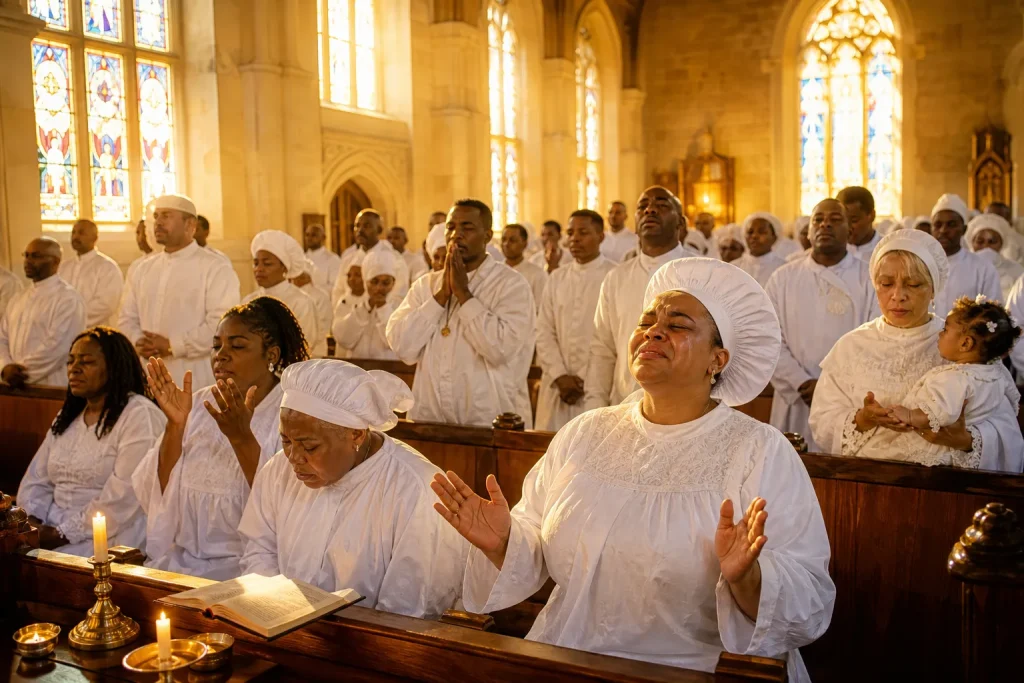
In Celestial Church worship practices, this means that gatherings are structured to create space for the Spirit’s movement. Prayer is dynamic and responsive. Teaching is not merely informational but transformational. Worship engages the whole person—mind, emotions, will, and spirit. This does not mean worship is chaotic or unguided; rather, it is reverently open to the Spirit’s prompting while remaining anchored in Scripture.
The Church teaches believers to cultivate sensitivity to the Holy Spirit through spiritual disciplines such as prayer, Bible study, fasting, and meditation. These are not works that earn God’s favor but practices that position the believer to hear God’s voice more clearly and respond to His leading more readily. The Spirit’s work includes both conviction of sin and assurance of belonging to God, both challenge and comfort.
Christian Living and Ethical Discipleship
Celestial Church spiritual principles are not confined to Sunday worship or formal Bible study. Rather, they are meant to shape every dimension of a believer’s life. The Church teaches that Christianity is a comprehensive worldview and way of living that addresses relationships, work, money, sexuality, justice, and every other area of human experience.
In Bible teaching focused on everyday Christian living, the Church connects theological doctrine to practical ethical choices. Believers are instructed in biblical principles regarding honesty in business, faithfulness in marriage, hospitality to strangers, care for the poor, and integrity in all dealings. The goal is not legalism—rigid rule-keeping for its own sake—but internalized transformation where believers increasingly want to do what is right because they love Christ and reflect His character.
The Church also teaches that Christians have a responsibility to their broader society. While maintaining clear spiritual boundaries, believers are called to be salt and light—to influence their culture toward justice, compassion, and truth. This might involve community service, advocacy for the vulnerable, honest participation in civic life, and witness through both words and deeds.
The Reality of Spiritual Warfare and God’s Protection
Celestial Church theology acknowledges the reality of spiritual dimensions beyond the physical world. The Church teaches that believers face genuine spiritual opposition from demonic forces that seek to undermine faith, corrupt morality, and draw people away from God. This is not superstitious fear-mongering but sober recognition of spiritual realities affirmed throughout Scripture.
However, the Church’s teaching on spiritual warfare is balanced and Christ-focused. Rather than obsessing over demonic activity, the emphasis falls on God’s superior power and the protection available to believers through faith in Christ. Believers are taught to recognize temptation and deception, to put on “the whole armour of God” through prayer and Scripture, and to resist evil in Jesus’s name. The Church teaches defensive and offensive spiritual practices—defensive through prayer and Bible reading, offensive through witness and intercessory prayer for others.
This doctrine creates a spirituality that is realistic about opposition but ultimately confident in Christ’s victory. Believers need not live in fear but rather in alert faith, recognizing danger while trusting God’s faithfulness and protection.
Prayer, Intercession, and Spiritual Warfare Through Prayer
Prayer holds a central place in Celestial Church practice and theology. The Church teaches that prayer is far more than uttering requests to God; it is intimate conversation with the Father, bringing every aspect of life into His presence. Prayer is both vertical—directed to God—and horizontal—affecting our relationships with others and our impact on the world.
Intercessory prayer—praying on behalf of others—is particularly emphasized. The Church calls believers to stand in the gap for family members, friends, leaders, nations, and the global Church. Online prayer groups within the Celestial Church community provide regular opportunities for corporate intercession, where believers unite their prayers for specific needs and causes.
The Church teaches different types of prayer: petition (asking for specific needs), thanksgiving (expressing gratitude), praise (honoring God’s character), confession (acknowledging sin), and intercession (praying for others). Each has its place in a balanced prayer life, and believers are encouraged to develop depth and variety in their prayer practices.
Discipleship, Growth, and Formation in Christ
If salvation is the beginning of the Christian life, then discipleship is its ongoing reality. The Celestial Church understands discipleship not as an optional advanced track for particularly committed believers but as the normal expectation for all followers of Christ. To be Christian is to be a disciple—a learner and follower of Jesus.
The Church provides structured pathways for spiritual growth. Through faith courses for Christian growth, believers move from foundational understanding to deeper knowledge and practical application. These resources address biblical theology, Christian living, spiritual disciplines, and leadership development. The Church recognizes that growth is not automatic but requires intentional effort, guided instruction, and community support.
Mentorship is another key component of Celestial Church discipleship. More mature believers are encouraged to invest in younger Christians, sharing both knowledge and lived experience. This creates an intergenerational transmission of faith where tradition and contemporary application inform one another.
Hope, Eternity, and God’s Future Purposes
The Celestial Church’s theological vision extends beyond the present age to the future God has promised. The Church teaches that history is moving toward a conclusion when Christ will return to judge the living and the dead, to complete the redemption of creation, and to establish His eternal kingdom. Believers will be raised from death in glorified bodies, freed from sin’s presence and power, and will dwell forever in God’s presence.
This eschatological hope—belief in God’s future promises—is not escapist fantasy but a motivation for faithfulness now. Because believers know that their labor in the Lord is not in vain, they persevere through difficulties, invest in others’ spiritual growth, and work toward justice and restoration knowing that God’s kingdom will ultimately triumph.
A Practical Action Plan for Understanding and Living Out These Beliefs
Step 1: Establish a Personal Bible Study Habit Begin reading Scripture systematically, perhaps using a Bible reading plan. As you read, ask how each passage reveals God’s character or calls you to action. The Celestial Church teaches that the Bible is living and active, speaking directly to contemporary believers.
Step 2: Connect with Community Attend worship gatherings regularly and participate in Celestial Church of Christ community activities. Authentic faith is not developed in isolation but in relationship with others who share your commitment to Christ.
Step 3: Develop a Prayer Practice Establish a regular time and place for prayer. Begin with five or ten minutes daily, gradually expanding. Include petition, thanksgiving, praise, confession, and intercession. Let prayer become a conversation with God rather than a performance.
Step 4: Pursue Intentional Discipleship If available in your context, engage with faith courses or small group studies designed to deepen understanding and application of biblical truth.
Step 5: Practice Ethical Consistency Identify one area where your choices do not yet reflect biblical principles. Bring it to prayer, study what Scripture says, and ask for the Holy Spirit’s help in aligning your conduct with your confession.
Step 6: Invest in Someone Else Ask God to show you one person you can mentor or encourage in their faith journey. Share what you are learning and create space for questions and mutual encouragement.
Frequently Asked Questions About Celestial Church Doctrine
What are the main theological beliefs of the Celestial Church of Christ?
The Celestial Church of Christ’s main theological beliefs center on the authority of Scripture, the deity and redemptive work of Christ, the reality and work of the Holy Spirit, salvation by grace through faith, the centrality of the Church as Christ’s body, and the reality of spiritual dimensions including both God’s kingdom and demonic opposition. The Church affirms historic Christian doctrines such as the Trinity, the incarnation, substitutionary atonement, and the bodily resurrection of Christ. Additionally, the Church emphasizes the continuity of Scripture with lived experience—theology matters because it shapes how believers live.
How do Celestial Church teachings guide Christian discipleship and daily living?
Celestial Church teaching integrates biblical doctrine with practical application through several means. Regular Bible teaching connects Scripture to contemporary life situations. Discipleship pathways help believers progress from foundational faith to mature Christian living. The Church’s emphasis on community accountability and mutual ministry means that believers are not left to interpret Scripture in isolation but within the context of a believing community. Spiritual disciplines such as prayer, fasting, and Bible study are cultivated as means through which the Holy Spirit transforms character. Additionally, the Church addresses specific life domains—work, family, relationships, finances, justice—from explicitly biblical perspectives, helping believers understand how faith informs every decision.
What spiritual practices define worship in the Celestial Church of Christ?
Celestial Church worship practices are characterized by reverence, Scripture-centeredness, and openness to the Holy Spirit’s guidance. Corporate worship typically includes singing, prayer, Bible reading and exposition, and space for responsive participation. The Church teaches that worship is not merely an emotional experience but a comprehensive offering of oneself to God—intellectual engagement with truth, emotional expression of devotion, volitional commitment to obedience, and spiritual sensitivity to the Spirit’s presence. Prayer is dynamic and participatory. Teaching is expository and applicable. The Church also emphasizes personal spiritual practices including prayer, Scripture meditation, fasting, and service as integral to authentic worship beyond formal gatherings. Small group gatherings and prayer meetings provide additional venues for believers to gather for mutual encouragement, intercession, and spiritual growth. Find more about the Celestial Church to understand how these practices shape community life and individual formation in Christ.
Conclusion: Living Out What You Believe
Understanding what the Celestial Church of Christ believes is not merely an intellectual exercise but an invitation into transformative faith. The Celestial Church core beliefs form a coherent theological framework where Scripture is authoritative, Christ is central, the Holy Spirit is active, and believers are called to authentic discipleship that reshapes every aspect of life. What distinguishes these beliefs is not novelty but ancient truth applied with contemporary sensitivity—doctrines affirmed throughout Church history now lived out in a global community spanning continents and cultures.
The Church’s emphasis on integrating theology with practice means that believing something matters only insofar as it changes how you live. A believer might intellectually affirm that Christ is Savior while living as if money or status or comfort were ultimate concerns. The Celestial Church calls for alignment between confession and conduct, between doctrine and discipleship, between what we claim to believe and how we actually live.
If you are exploring what the Celestial Church of Christ believes, you are invited not merely to intellectual assent but to lived transformation. You are invited into a community of believers committed to Scripture, devoted to Christ, sensitive to the Holy Spirit, and dedicated to growing in holiness and usefulness in God’s kingdom. This is not a faith of passive observers but of active participants, not a doctrine to be memorized but a way of life to be embodied.
The Church’s teachings come alive not in theological abstractions but in changed marriages, reconciled relationships, transformed communities, and believers increasingly reflecting the character of Christ. This is what the Celestial Church of Christ believes: that God through Christ is redeeming broken people and broken systems, that the Holy Spirit is actively working in history and in hearts, and that believers have the profound privilege and responsibility of cooperating with God’s purposes in their generation.
A Closing Reflection
If your heart has been stirred by these core beliefs and you sense God’s invitation to deeper faith and community, consider taking a step. Whether you have followed Christ for decades or you are new to faith, there is always more to learn and further to grow. Seek out a local Celestial Church community, engage with news and updates from the global Church, and commit to the disciplines of prayer, Bible study, and community that foster genuine spiritual transformation. The God revealed in Scripture—Father, Son, and Holy Spirit—awaits your response.
Trusted Resources for Further Study
For deeper study see BibleGateway, Bible.com, Britannica, WHO, and Library of Congress.